
A Private Foundation Award to Watch Giant Planets Grow
I’m thrilled to share that our team has received one of the first FirstLight Awards from Schmidt Sciences! The project is led by longtime collaborator Kim Ward-Duong (Smith College), with Yifan Zhou (University of Virginia) and me as co-PIs. It is called “Illuminating the Mechanisms of Giant Planet Formation with All Four Schmidt Observatories in Concert.” Over the next five years, we’ll use the new Eric and Wendy Schmidt Observatory System to monitor how young giant planets and brown dwarfs grow, and to hunt for new planets that are still embedded in their birth environments.
The Observatory System brings together four new facilities that span optical, infrared, and radio wavelengths: Argus, Lazuli, LFAST, and DSA. Using all four together will help us assemble a complete picture of accretion onto young planets and brown dwarfs across many wavelengths at once. That’s something no single telescope can do, and it’s exactly what we need to understand how these objects build up their mass.
The awards were announced in early November at the inaugural Schmidt Observatory System Science Symposium in Florence, Italy, where Kim and I both had the chance to present the project.
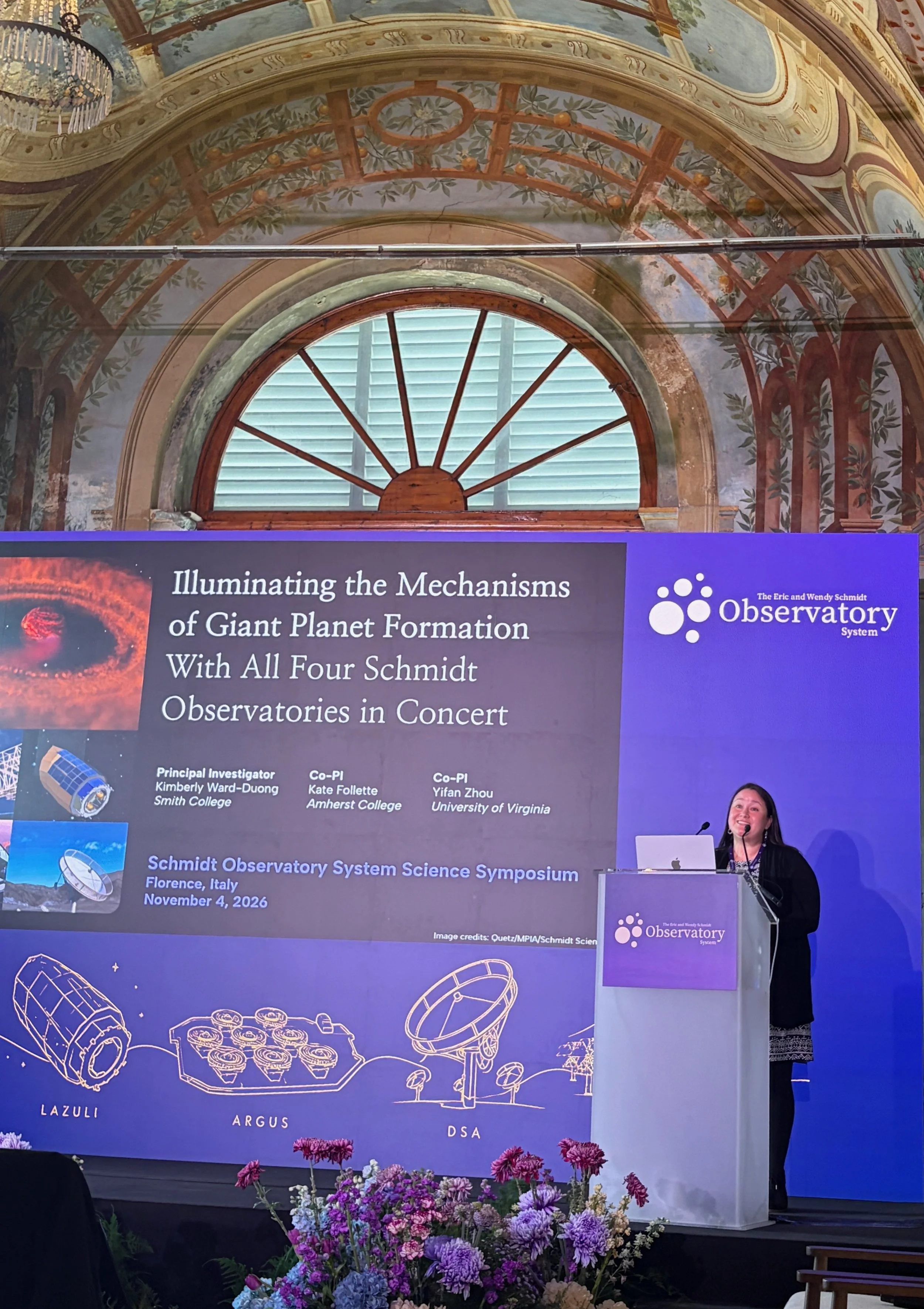
Kim Presenting “Illuminating the Mechanisms of Giant Planet Formation” at the Schmidt Observatory System Science Symposium in Florence.
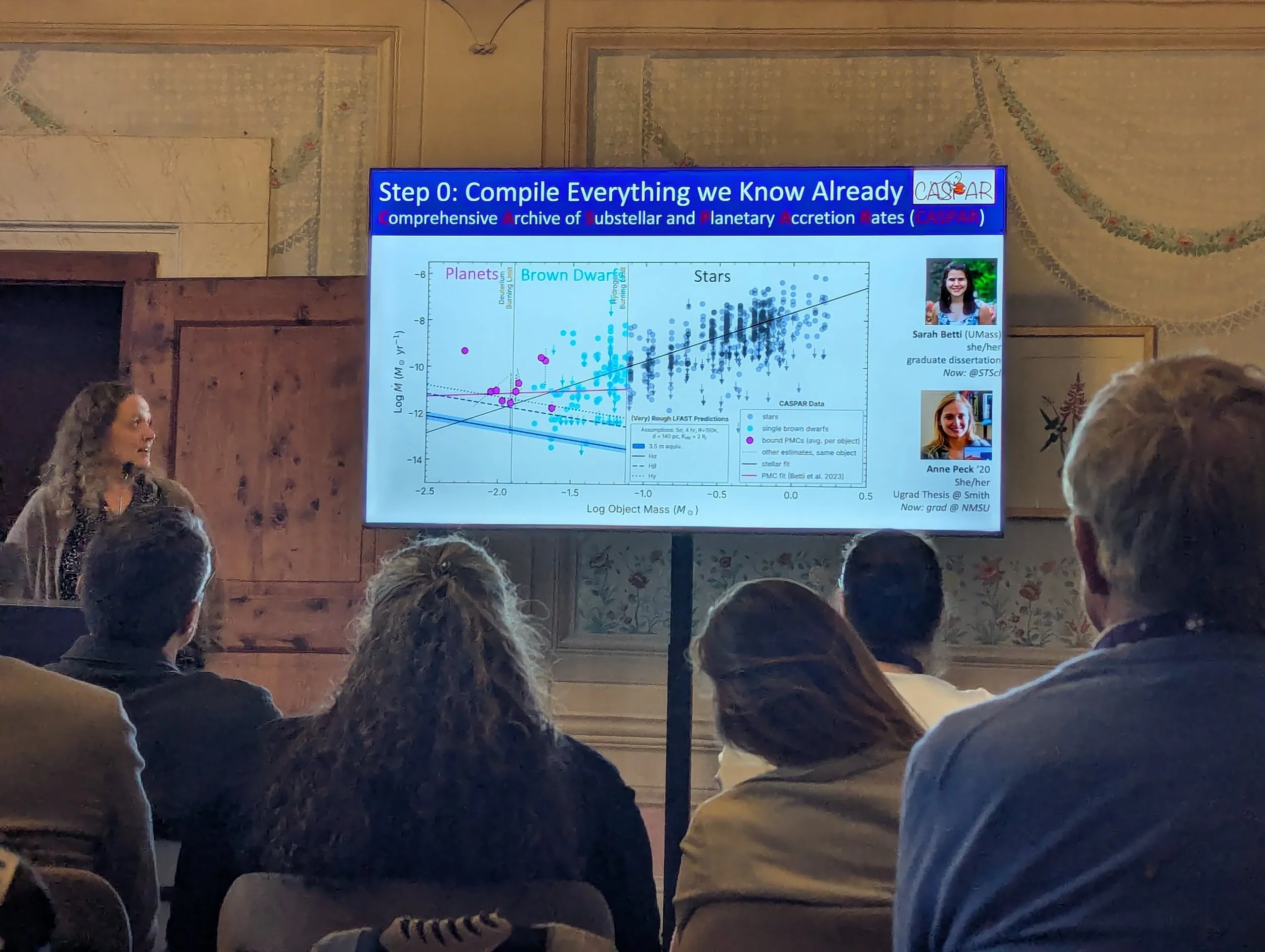
Me presenting Step 0 of the project: compile everything we know already! Our starting point is CASPAR, the Comprehensive Archive of Substellar and Planetary Accretion Rates, built by Sarah Betti (UMass PhD) and Anne Peck (‘20, Smith College) along with many Follette Lab undergraduates.
The symposium was held in a beautiful setting outside Florence, and it was hard to complain about the view between sessions.
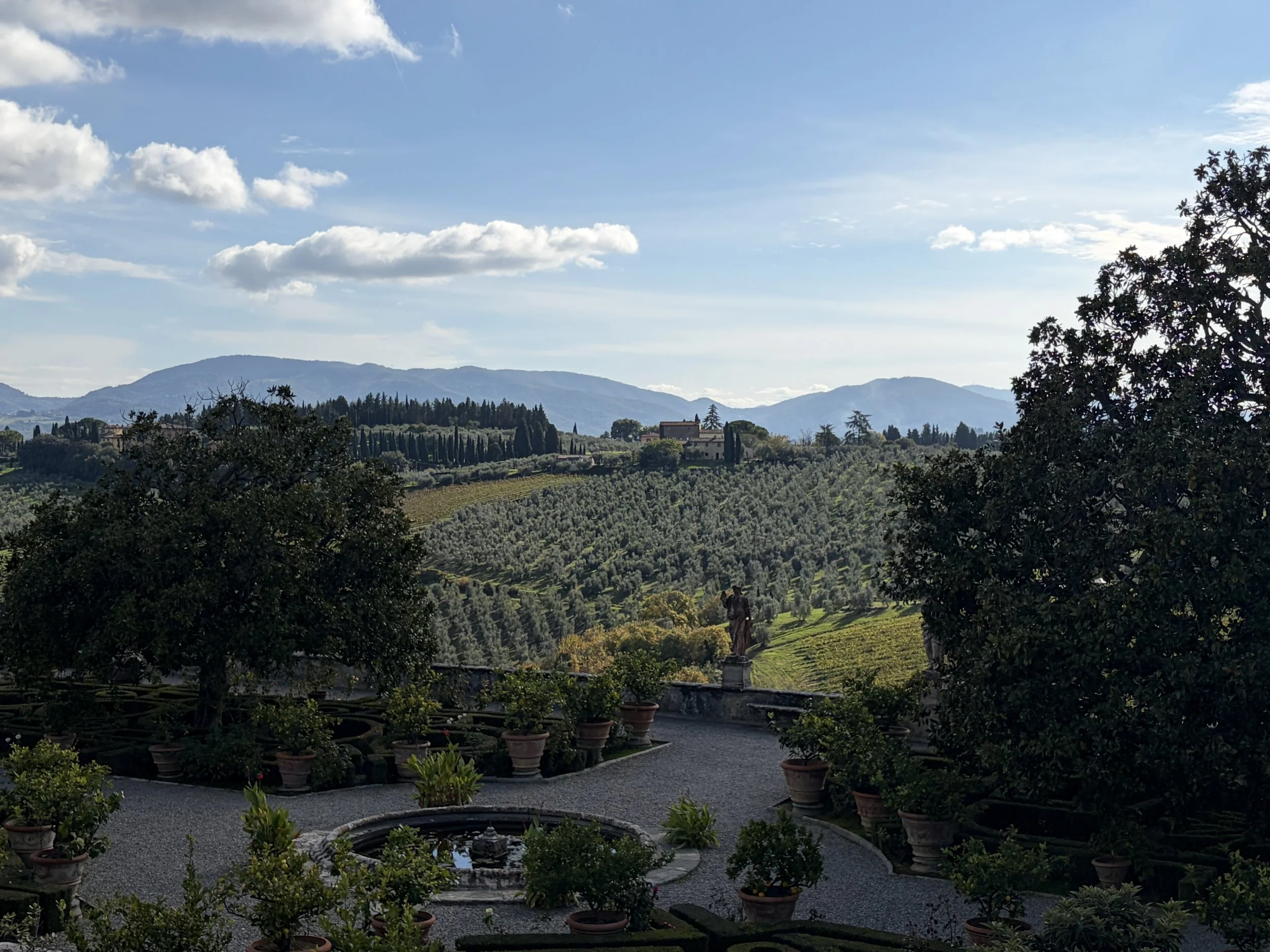
A view of Tuscan grape fields from the venue
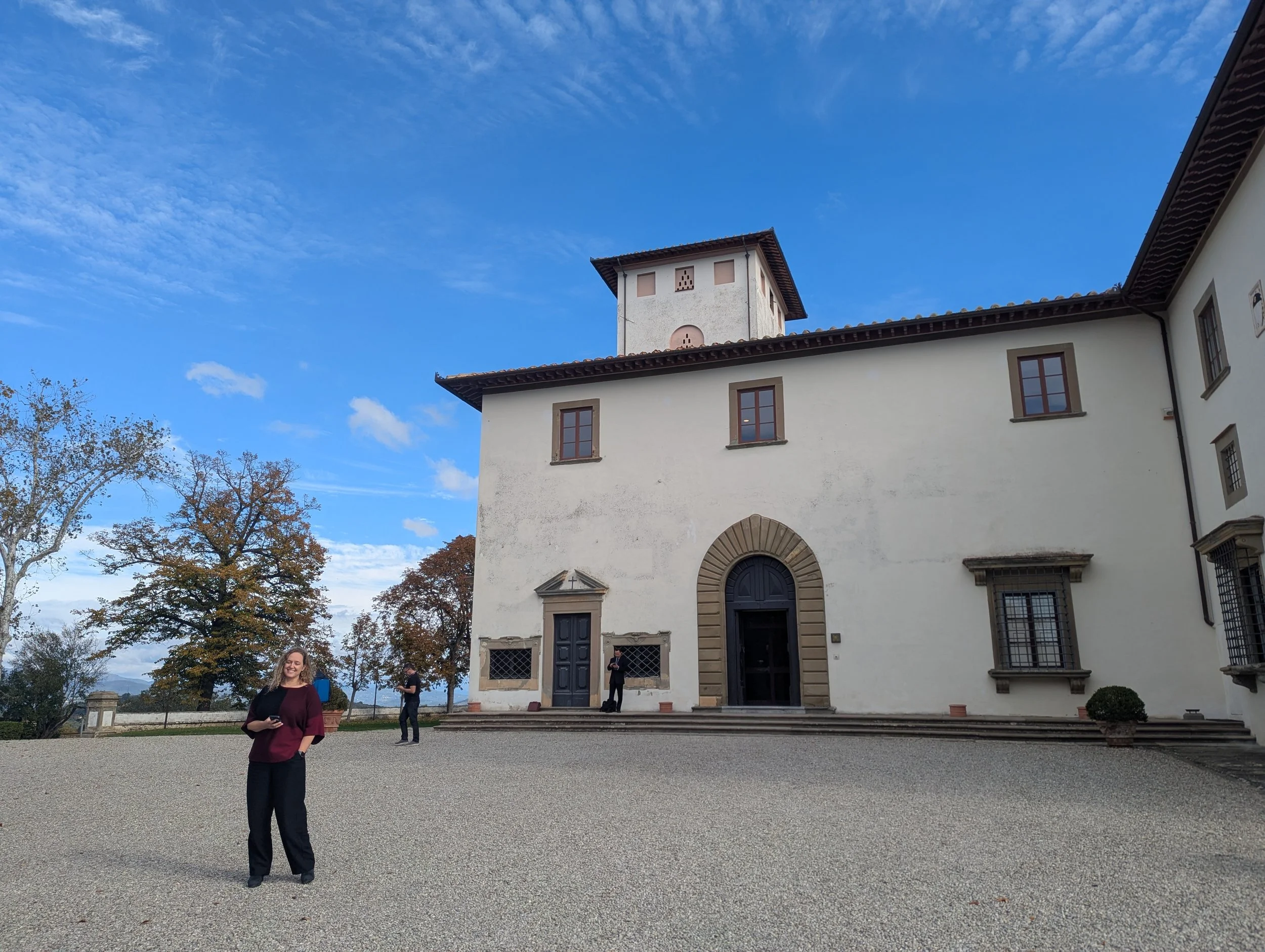
Me outside the villa where the symposium was hosted
I’m so grateful to Schmidt Sciences for supporting this work, and to Kim and Yifan for being such wonderful collaborators. There will be plenty of opportunities for Follette Lab students to get involved, so stay tuned!